Book a time with our legal AI experts for a personalized demo of our autonomous agents. The demo itself only takes 15 minutes and you can deep dive into the use cases most relevant for you, whether it's drafting SoWs, reviewing NDAs, or completing infosec forms.
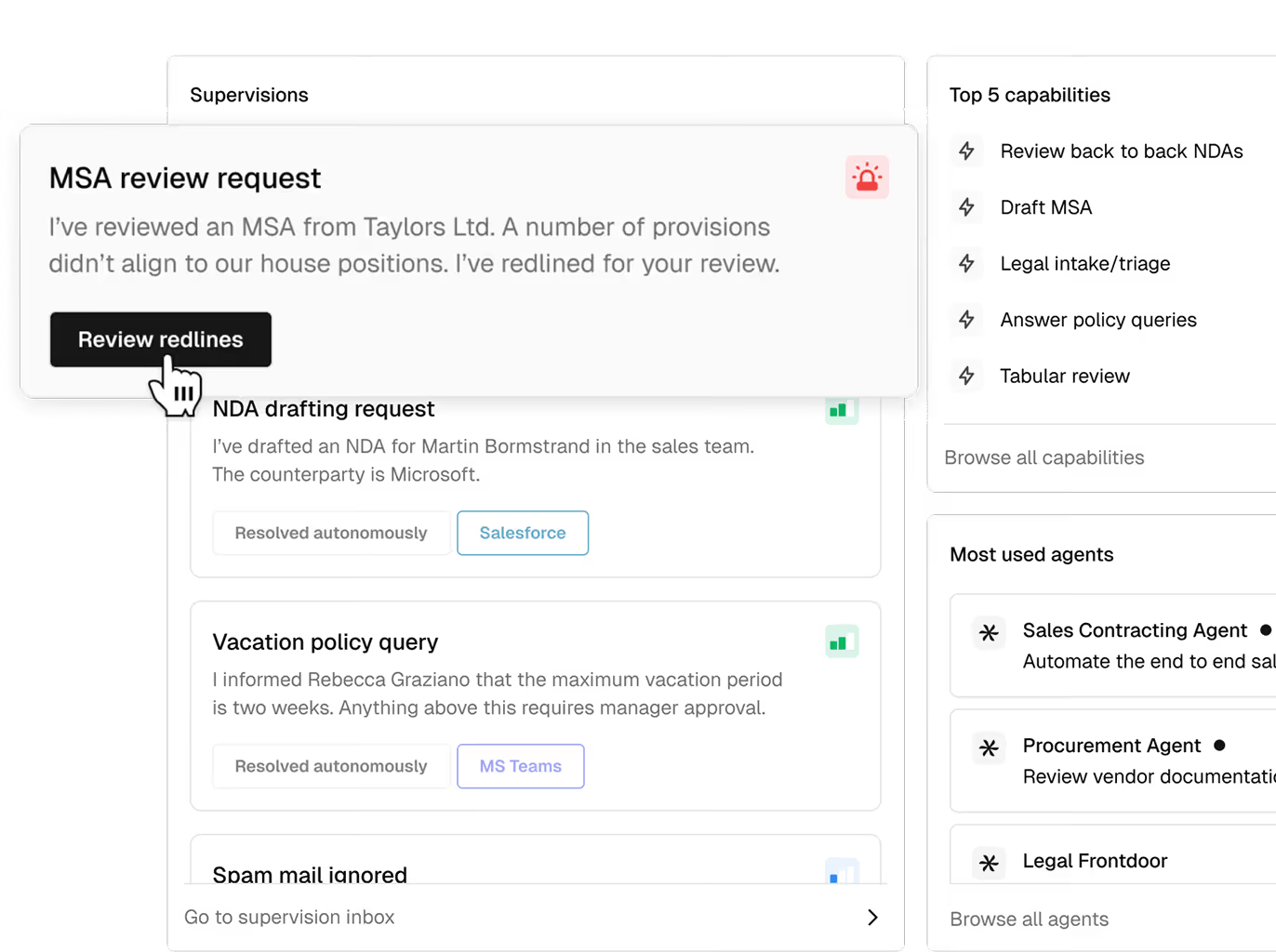
A request arrives. The agent goes to work. A lawyer reviews what matters.
Intake & routing
Arrive

Intake & routing
Requests land at a dedicated agent email address, or at an inbox embedded on your own domain (contracts@yourco.com). The agent reads each one, identifies the work type, pulls missing context, and applies live status labels in Outlook so the team can see what's picked up and what's done.
Execution
Work

Execution
The agent picks the right task for the request and runs it against your playbooks, templates, and fallback positions. Drafting pulls details from the email and attachments. Review produces tracked-change redlines. Objection handling negotiates within your rules. Multi-step workflows across hundreds of pages complete without dropped work.
Supervision & send
Approve

Supervision & send
When supervision is on, the output lands in a review queue – yours, your partner firm's, or Flank's. The reviewer sees what the agent decided, why it escalated, and can approve, edit, or resolve in a click. Approved work replies to the requester from the agent's address. Every correction trains the agent next time.
Seven task types. Configured on your playbooks, not generic training data.
Agent skills
How it works
Impact for legal
01
Triage & routing
Reads the request, identifies work type and urgency, pulls missing context, and forwards to the right person or agent. Misdirected requests get filtered out entirely.
Legal stops being a switchboard. Routine matters get handled instantly; complex ones reach the right lawyer without delay.
02
Third-party review
Reviews DOCX or PDF against your playbook. Optional tracked-change redlines and comments. Configurable per agent: playbook, redline toggle, custom guidance.
Deals stop stalling on first review. Senior counsel only sees exceptions. Contract positions remain consistent across the company.
03
Document drafting
Pulls details from the email chain and attachments, selects the right template, applies conditional clause logic, and delivers a complete first draft.
Legal no longer spends time producing predictable first drafts. Internal teams get immediate documents. Cycle time collapses.
04
Objection handling
Reviews counterparty redlines on your own paper, accepts what's in policy, proposes counter-redlines with fallback language, and rejects the rest. Three rejection modes: reject and comment, redline-over-redline, or comment only.
Negotiations move faster. Risk posture remains consistent. Legal stops rewriting the same objections repeatedly.
05
Research & Q&A
Searches only your approved sources (policies, clause libraries, internal FAQs) and synthesises grounded answers. No generic training data, no hallucinations off-source.
Sales, procurement, HR, and marketing stop waiting days for answers. Legal reduces interruption load. Answers are authoritative and consistent because they come from approved sources only.
06
Custom prompts
Write natural-language prompts the agent executes on demand: summarise a document into a defined format, extract key terms into a table, run a compliance checklist. Sources and complexity level configurable.
Consistent, verifiable execution on repetitive tasks that don't fit the standard task types. No copy-paste errors. No format drift.
07
Bespoke workflows
Entirely custom software builds engineered by Flank's Forward Deployed team: integrations, internal tools, and external-system actions made callable by any agent. Used for niche or highly specific legal workflows that fall outside the standard task types.
Flank fits the internal process, not the other way around. Agents reach into the same systems your team uses.
Three ways to supervise. Same product, same playbooks. You choose who sits behind the queue.
Your lawyers

Your in-house team reviews and approves agent outputs. They keep full control over judgment calls, use the supervision cockpit to approve, edit, or escalate, and dial back supervision over time as trust builds. The most common starting model.
A partner firm

A law firm you already trust runs the supervision layer on your behalf. Simmons & Simmons is our launch partner, with a growing network alongside. They sit inside your governance, know your playbooks, and manage the exceptions. An agentic managed service delivered by a firm, not a vendor.
Flank's supervision team

Our own qualified commercial counsel, led by Lorna Kehmraz, reviews every agent output against your playbooks and your standards. A managed service with agentic economics. Your playbooks, escalation rules, and institutional knowledge stay with you. The work never leaves your building.
Turn supervision on and off, by agent, by task, by threshold.
Safe rollouts
Set the whole agent to supervised. Every action routes through review before it reaches the business. The right starting point for new deployments and high-stakes workflows.

Task-level supervision
Different risk profiles get different rules on the same agent. Supervise contract review; let Q&A run autonomously. The agent knows when to check in and when to proceed.

Escalation thresholds
Any topic, uncertainty score, or counterparty ask outside playbook triggers a flag. The agent completes the first pass, logs its reasoning, and queues the rest for a lawyer.

Supervision cockpit
Where flagged work lands. Review the agent's key decisions in-platform: which clauses it flagged, which redlines it rejected, which positions it escalated. Approve, edit, or resolve in a click. Every correction trains the agent next time.

Live in weeks. Self-serve from there.
Every deployment includes a Forward Deployed Engineer who works with your team to define the use case, build the agents, and get them into production.
Once you're set up, your legal ops team can spin up new agents in minutes. No ticket required. Most customers get their first agent live in 2–4 weeks.
01
Pilot deployment
Deploy an agent to a single business unit (e.g. sales for NDAs). Each agent has its own email address, so the business emails it exactly like they email legal.

02
Scope & guardrails
Define your playbooks, templates, and risk thresholds. Choose what the agent can approve autonomously vs. what gets escalated. From here, designated users can create and configure new agents directly.

03
Supervised rollout
Turn on lawyer-in-the-loop review. Every agent action is logged and routed through supervision before finalising. Build trust, refine the playbook, watch the agent improve from every correction.

04
Scale with confidence
Once legal is comfortable, dial supervision back for routine requests. The agent handles 80–90% autonomously. Legal reviews only flagged items and final outputs.

FAQ
Seven task types: triage and routing, third-party review with redlines, drafting from your templates (NDAs, MSAs, DPAs, SOWs, term sheets, franchise agreements), objection handling on your own paper, research and Q&A grounded in approved sources, custom prompts, and bespoke workflows built by our Forward Deployed team. All delivered via email, the agent's own URL, and (soon) Teams.
Any of the three, and you can change your mind. Most customers start with their own lawyers supervising. Some hand the supervision layer to a partner firm (Simmons & Simmons is our launch partner). Others use Flank's own qualified commercial counsel as a managed service. Same product, same playbooks, same cockpit. Your choice of who sits behind the queue.
When supervision is on, the agent's proposed output lands in a queue before anything reaches the business. The reviewer sees the original request, the agent's reasoning, and the draft output, and chooses Approve & send, Edit, or Mark as resolved. Set thresholds by topic, uncertainty, or counterparty ask. Every correction trains the agent next time.
Reject and comment removes the counterparty's change and leaves a comment explaining why. Redline-over-redline preserves their change and layers a new tracked change on top, so the full negotiation trail is visible. Comment only leaves the change untouched and attaches reasoning as a comment. Counter-redlines (where the agent proposes fallback language) work independently of the rejection mode.
Yes. Once you're set up, designated users can create new agents, assign task types, and manage configurations directly in the governance platform. Scaling from one agent to five is a ten-minute configuration, not a support request. Forward Deployed Engineers stay involved for complex integrations and ongoing evolution.
Most customers are live in 2–4 weeks. A Forward Deployed Engineer maps your workflows, gathers your templates and playbooks, and configures the first agent. It goes live in supervised mode; supervision is dialled back as you build trust. Additional agents after that can be spun up by your team in minutes.